


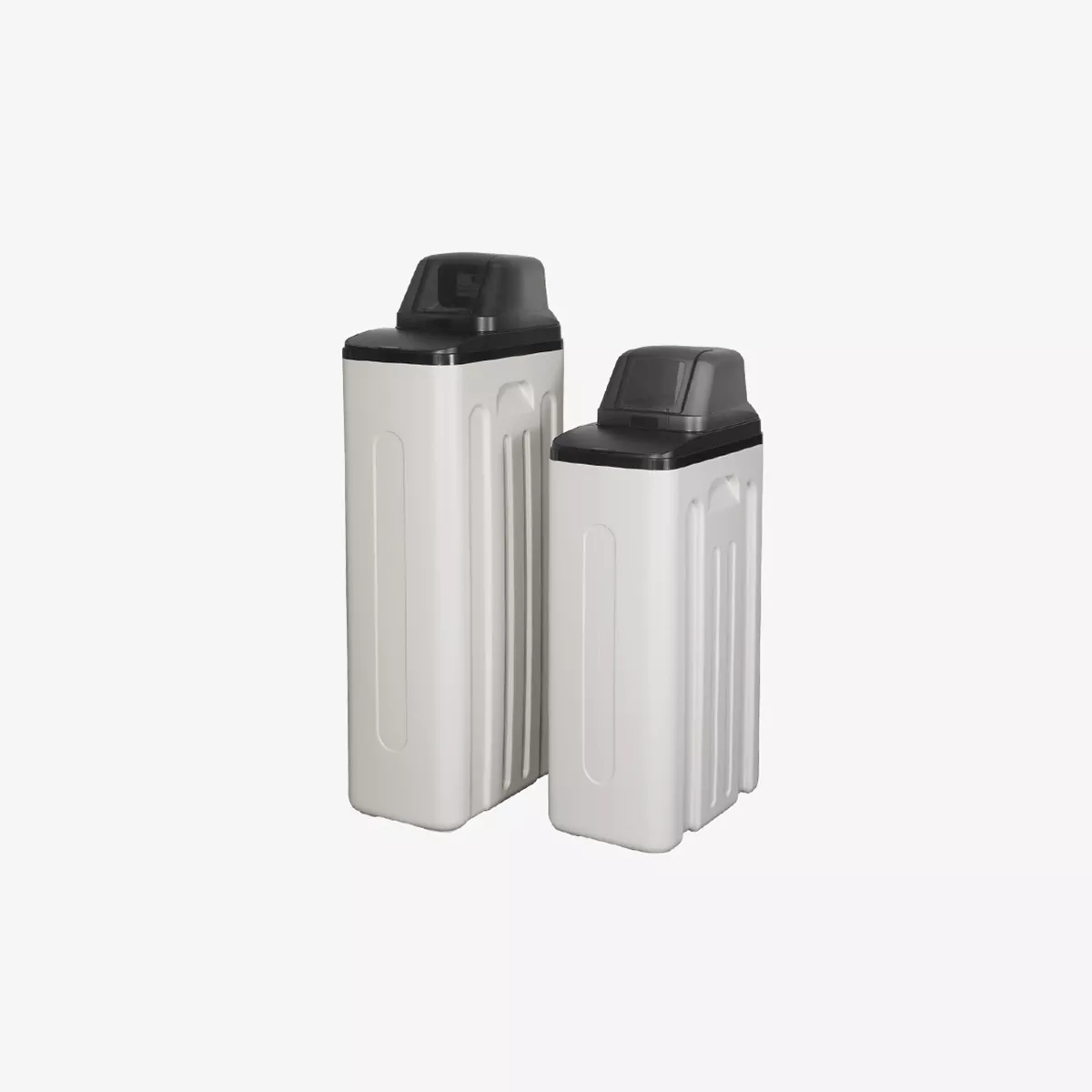
In many regions tap water contains high levels of calcium and magnesium. These minerals cause the water to be “hard” and lead to scale buildup in your home’s plumbing. Home Water Softeners, installed at the main water inlet, act as your home’s invisible guardian by stopping limescale before it even enters your home.
How Does Hard Water Harm Your Home and Your Wallet?
Limescale isn’t just an aesthetic problem; it’s a hidden source of costs. The damage caused by hard water is greater than you might think:
Personal Care Products: Hard water prevents soap and shampoo from lathering. By clogging pores, it causes the skin to dry out and the hair to become dull and brittle.
Shortens the Lifespan of Appliances: The heating elements in washing machines, dishwashers, and boilers become coated with limescale. This hinders heat transfer, increases energy consumption by 20–30%, and leads to premature breakdowns.
Cleaning Problem: Faucets, sinks, and tiles constantly lose their shine. You end up spending more money on limescale removers and more time on cleaning.
What Is a Household Water Softener?
These devices are not simple filters. They undergo a chemical reaction thanks to the synthetic ion-exchange resin they contain.
As water passes through the unit, the calcium (Ca) and magnesium (Mg) ions that cause hardness are removed by the resin. In their place, harmless sodium (Na) ions are released into the water. The result: The water flowing from your taps is now “soft water.”
How Do Fully Automatic Systems Work?
As technology has advanced, these devices have become much easier to use. The system essentially consists of two main components:
- Resin Tank: The location where the softening process takes place.
- Salt Tank: The compartment where the salt tablets required for the resin to regenerate are placed.
The fully automatic valve on the unit measures the amount of water flowing through it. When the resin becomes saturated with lime, it automatically initiates the “regeneration” (backwash) process. It rinses the resin with brine, flushes the lime out through the wastewater, and renews itself. All you need to do is add a tablet of salt once a month (approximately).
Why Should You Get a Water Softener for Your Home?
- Energy and Detergent Savings: Soap lathers much more easily in soft water. Your use of detergent, shampoo, and cleaning products will decrease by approximately 50%. Additionally, since limescale-free heating elements heat water more quickly, your electricity and natural gas bills will go down.
- Silky-Smooth Skin and Hair: When you step out of the shower, you’ll notice that your skin is soft, your hair is easy to comb, and it shines.
- Sparkling Bathrooms and Kitchens: No more scrubbing your faucets. Your washed glasses won’t have water spots, and your laundry won’t feel stiff—even without fabric softener.
- Boiler and Plumbing Protection: Your home’s water pipes—the lifeblood of your home—won’t clog, and water pressure won’t drop. Boiler heat exchangers won’t corrode, saving you from costly repair bills.
Why Should You Get a Water Softener for Your Home?
Instead of fighting limescale, eliminate it at the source. Home water softeners aren’t a luxury—they’re insurance for your plumbing.
Our engineers measure the hardness level of your tap water to determine the unit with the most suitable capacity for your home. Contact us to take the first step toward a limescale-free life.