


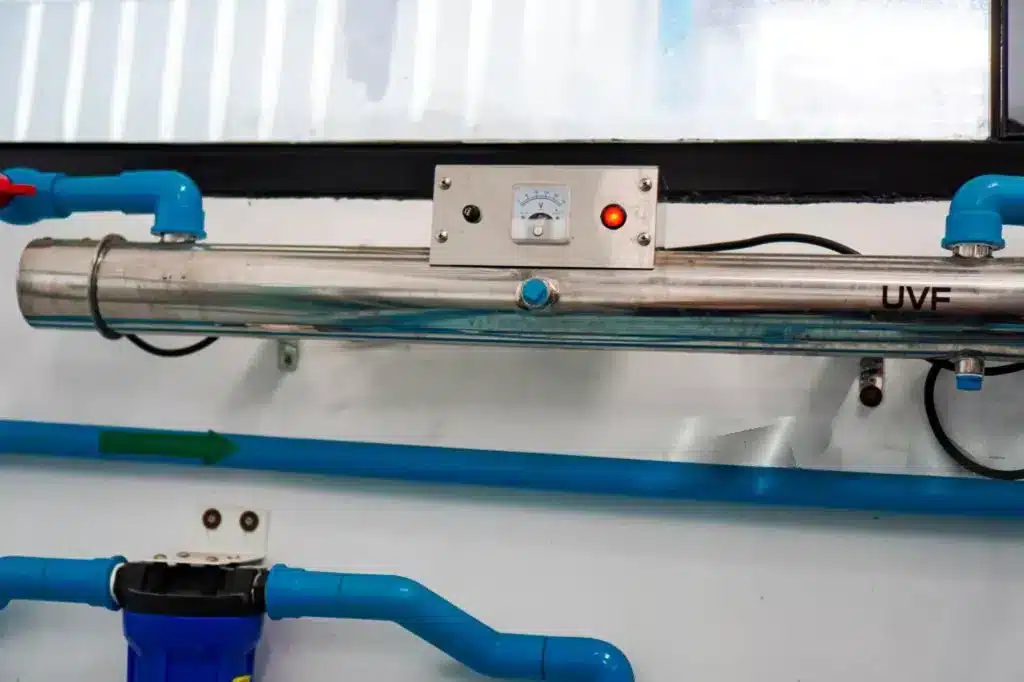
In industrial production lines, drinking water networks, and commercial establishments, the chemical and physical purification of water alone is not sufficient. Microorganisms such as bacteria, viruses, fungi, algae, and spores, which are invisible to the naked eye, directly threaten both human health and the shelf life and quality of manufactured products. While chemical disinfection methods such as traditional chlorination leave unwanted odors, tastes, and hazardous byproducts in the water, ultraviolet (UV) systems are the most advanced engineering solution that ensures microbiological safety without adding any chemicals to the water.
UV technology utilizes the natural power of light to eliminate microorganisms. An industrial UV water treatment system designed with the correct dosage and reactor design instantly halts the reproductive capacity of pathogens in the water, providing sterilization within seconds. The fact that the system leaves no harmful residue in the water and does not alter its mineral composition makes it an indispensable part of sensitive industrial processes.
How Do Ultraviolet (UV) Systems Work?
The UV sterilization device essentially consists of a reactor body made of 304 or 316 grade stainless steel, quartz sleeves, and high-quality ultraviolet lamps placed inside these sleeves. The disinfection process is based on a microbiological and photochemical principle:
DNA and RNA Structure Degradation
The water passing through the reactor is exposed to short-wave UV-C rays with a wavelength of 254 nanometers (nm) emitted by specially manufactured lamps. This specific wavelength of light penetrates the cell wall of microorganisms and directly breaks down their DNA and RNA sequences. Bacteria and viruses with damaged genetic structures become inactive and cannot undergo cellular division (reproduction). Thus, microbial life in the water is completely stopped.
How Do Ultraviolet (UV) Systems Work?
UV systems play a critical role in numerous industries, not only for human health but also for process safety:
- Microbiological Safety Shield in Critical Processes: In the food, beverage, and soft drink industry, it ensures that the water entering the product formulation is rendered completely sterile without the need for thermal processing, thereby preserving the original taste and structure of the product.
- Health and Pharmaceutical Industry Standards: It is safely used in hemodialysis centers in pharmaceutical production processes that must be completely pure and have zero microbiological values.
- Zero Chemical Residue Ecological and Natural Sterilization: Since it does not add any oxidative substances such as chlorine or ozone to the water, it completely prevents the formation of carcinogenic by-products such as THM (Trihalomethane). It is an ecological and environmentally friendly chemical-free disinfection method.
- Compact Design and Operational Ease: UV units take up very little space in the facility thanks to their compact bodies and, with high automation compatibility, require no mechanical workload other than lamp monitoring.
- Membrane Systems and Advanced Treatment Integration: UV lamp filter systems positioned before or after reverse osmosis membranes play a vital role in maintaining the integrity of the facility. When used prior to reverse osmosis, they measurably slow down biological fouling that may occur on the membrane surface, thereby extending the life of the membranes.
Flawless Project Planning with Our Professional Team
With over 30 years of uninterrupted service in the water treatment industry and our extensive engineering expertise gained in the field, we provide the most reliable disinfection solutions tailored to your facility’s needs. Over this period of more than thirty years, we have undertaken countless projects, from small-scale businesses to large industrial facilities, building an extensive field database on ensuring the microbiological quality of water. Our team, which analyzes the nature of water and the sensitivity of industrial processes, goes beyond standard equipment supply to design systems that are fully integrated into your process.
Determining the reactor diameter suitable for the system flow rate, calculating the required UV dosage according to the flow rate in accordance with engineering standards, and installation procedures are carried out meticulously by our professional team. In addition, with our original quartz sleeve and lamp replacement services during periodic maintenance processes, we ensure that your disinfection safety remains uninterrupted for years.
You can contact our engineering team to eliminate microbiological risks from your business and ensure the quality of your process water.