


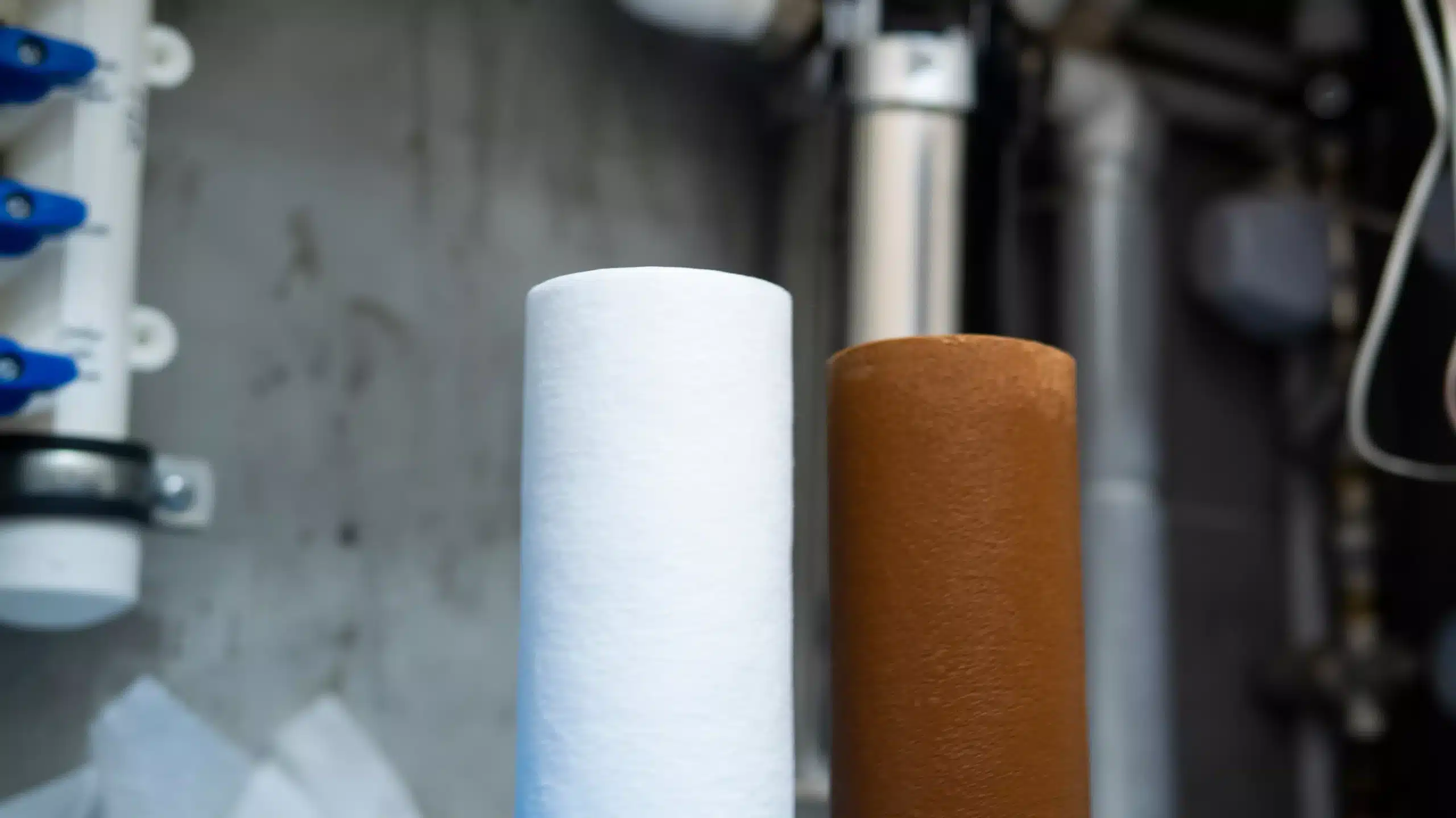
As one of the most critical components of water treatment technologies, the cartridge filter serves as the cornerstone that ensures the safety of the precise systems responsible for determining and monitoring water quality. Whether it’s a precision-oriented industrial production line or a comfort-focused residential project, these filters play an indispensable role in physically removing unwanted particles from the water.
Although it may seem like a simple consumable, a cartridge filter does more than just clarify water. It also serves as a strategic line of defense that optimizes operating costs by protecting expensive advanced treatment equipment. So, what exactly do these filters do, and which one is right for your business?
The Basic Operating Principle of Cartridge Filters
The primary purpose of cartridge filters is to trap suspended solids (SS), sediment, sand, rust, and other particles in the water at the micron level. This process removes turbidity from the water, giving it a clear appearance. However, their true value lies in “system protection.”
In particular, when used upstream of high-cost equipment such as reverse osmosis (RO) membranes, UV disinfection systems, or precision dosing pumps, these filters prevent clogging and microscopic damage to such devices. For a business, using the right cartridge filters means preventing unplanned downtime and ensuring production continuity.
Common Types of Cartridge Filters

Activated Carbon Cartridges: They remove not only sediment but also organic substances and chlorine that affect the taste, odor, and color of the water.
Spun (Sediment) Filters: Made from polypropylene. Typically available in 1-, 5-, and 10-micron ratings, they are ideal for trapping coarse sediment. They are economical and can be replaced frequently.
Spun-Bonded Filters: These are produced by winding fibers around a core using a special technique. They have a high dirt-holding capacity and provide deep filtration.
Washable (Pleated) Filters: These are typically preferred for higher flow rates. Since they can be removed and washed when dirty, they offer long-term cost savings.
Critical Areas of Use in Industrial Facilities
Water standards in industrial settings directly impact the quality of the products manufactured. Cartridge filter technology offers customized solutions for many industries thanks to its flexible design:
Power Plants: Filtering the water used in cooling towers helps keep heat transfer surfaces clean, thereby improving energy efficiency.
Food and Beverage: To preserve the product’s taste, clarity, and shelf life, the water must be completely free of sediment.
Chemicals and Cosmetics: Precision filtration at the micron level is essential to prevent product formulation degradation and ensure color stability.
Textile and Dyeing Plants: Ensures that particles affecting dye retention on fabric are removed from the water.
Its Role in Residential and Commercial Settings
Cartridge filters are widely used not only in heavy industry but also in hotels, hospitals, restaurants, and residential buildings. Trapping coarse particles from municipal or well water at the building’s entrance extends the lifespan of plumbing pipes.
Especially in restaurants and cafes, maintaining the performance of coffee machines, ice machines, and dishwashers is of critical importance. Using cartridge filters in these settings prevents breakdowns caused by limescale and sediment, thereby reducing your technical service costs. It ensures that the water reaching the end user is clear, odorless, and healthy.
The Importance of Choosing the Right Cartridge Filter
Although there are many products on the market labeled as “standard,” the characteristics of each water source vary. The type of filter to be used (spun, fiber, or pleated), its micron rating, and size (10“, 20”, 30“, or 40”) must be professionally determined based on the water flow rate.
An incorrectly selected cartridge filter;
- Frequent clogs can increase staff workload and costs,
- Or, if the pores are too large, it may fail to function properly, causing the expensive membrane systems behind it to fail.
Making an engineering-based choice to maximize efficiency in your water treatment processes and protect your equipment is the best investment you can make to add value to your business.