


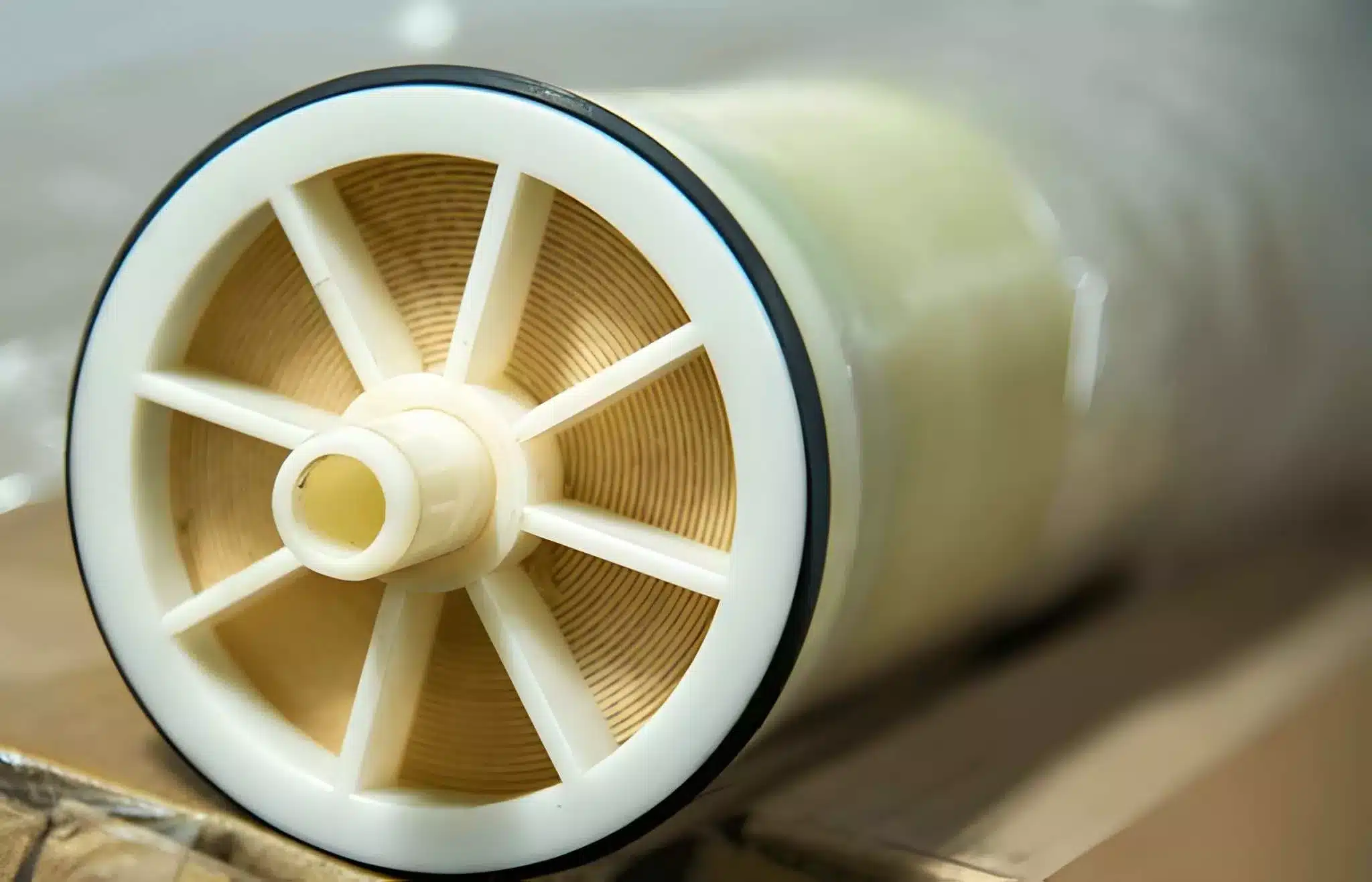
In today’s industry, water quality is a critical factor that determines production processes just as much as the quality of the raw materials used. This is where membrane technology—the most advanced form of water treatment and often referred to as the “heart” of modern systems—comes into play. This concept, which businesses frequently encounter in their pursuit of efficiency, encompasses far more than simply filtering water.
So, what exactly is membrane technology? In the simplest terms, membranes are semi-permeable barriers that separate dissolved minerals, heavy metals, bacteria, and viruses from water at the molecular level. However, for a commercial enterprise, this technology is not merely a separator; it is a strategic engineering marvel that ensures production standardization, optimizes energy costs, and guarantees product quality.
Working Principle and Structure of Membrane Technology
The principle of “selective permeability” lies at the heart of membrane technology. Unlike traditional methods, this system performs filtration at the microscopic level. Membranes used in Reverse Osmosis (RO) systems, in particular, operate under high pressure to allow water molecules to pass through while retaining unwanted contaminants in the water at levels far below the micron scale—even at the ionic level.
This process makes a difference where traditional filtration methods fall short. For example;
- A sand filter or cartridge filter can only trap particles visible to the naked eye.
- Membranes, on the other hand, reduce the conductivity of water, thereby producing a form of water that is as close to pure water as possible.
This technological advantage enables the production of the ultra-pure water that businesses require through a physical process, without the need for intensive chemical use.
Types of Membrane Technology Used in Industry
In the water treatment industry, no single solution fits every need. For this reason, membrane technology is categorized into different classes based on pore size and separation capabilities. Depending on your business’s needs, the following types may be selected:
- Reverse Osmosis (RO): This is the most commonly used method. It purifies water to a degree of up to 99% by removing even monovalent ions.
- Nanofiltration (NF): It has a slightly less stringent structure compared to RO. It is typically used for hardness removal and the separation of specific ions.
- Ultrafiltration (UF): Removes bacteria, viruses, and suspended solids while allowing dissolved minerals to pass through. It is typically used for pretreatment or wastewater reclamation.
You can visit the Industrial Water Treatment Systems page on our website to see which system is best suited for your business.
Critical Areas of Use in Industrial Facilities
The scope of membrane technology is broad enough to encompass every sector where water quality is critical. This technology, which is not limited to drinking water production, is the lifeblood of industry.
Wastewater Recovery: In line with environmental sustainability goals, wastewater can be converted back into process water using membrane technology.
Pharmaceutical and Food Industries: The suitability of a product for human health and compliance with hygiene standards depend directly on the purity of the water used. Membranes provide safe water free of microorganisms.
Power Plants and Boiler Feedwater: Removing lime and minerals from the water in steam boilers is critical to preventing system corrosion and energy loss.
Textiles and Chemicals: Keeping the conductivity levels of process water under control prevents operational losses by avoiding dyeing defects or chemical reaction failures.
Impact on Efficiency, Lifespan, and Operating Costs
For a business, investing in membrane technology is not just about producing water; it is also about long-term efficiency management. However, for membranes to operate at peak performance, they rely on the presence of proper pretreatment systems and regular maintenance.
Delivering water to the membrane at the correct pressure and flow rate not only improves the quality of the produced water but also extends the membrane’s service life by delaying fouling. The use of high-quality membrane technology and proper operating conditions ensures the following:
- Low Wastewater Volume: Helps you establish an environmentally responsible business profile.
- Energy Savings: Thanks to low-pressure membranes, pump electricity costs are minimized.
- Chemical Savings: This results in less need for regeneration and cleaning.
In conclusion, membrane selection and management is more than just a technical detail; it is a financial decision that directly impacts your company’s profitability. To transition to membrane technology at your facility or to upgrade your existing system, please contact our team of experts.